In the face of a major push by the tobacco companies and their allies to trick Parties to the WHO Framework Convention on Tobacco Control (FCTC) to integrate the industry’s “harm reduction” marketing message into FCTC guidelines, the WHO has issued a position paper on harm reduction (below). The WHO’s bottom line: “When it comesContinue reading “WHO position on Tobacco Control and Harm Reduction”
Author Archives: Stanton Glantz
Juul’s Connection to ‘Independent’ Expert Farsalinos Revealed
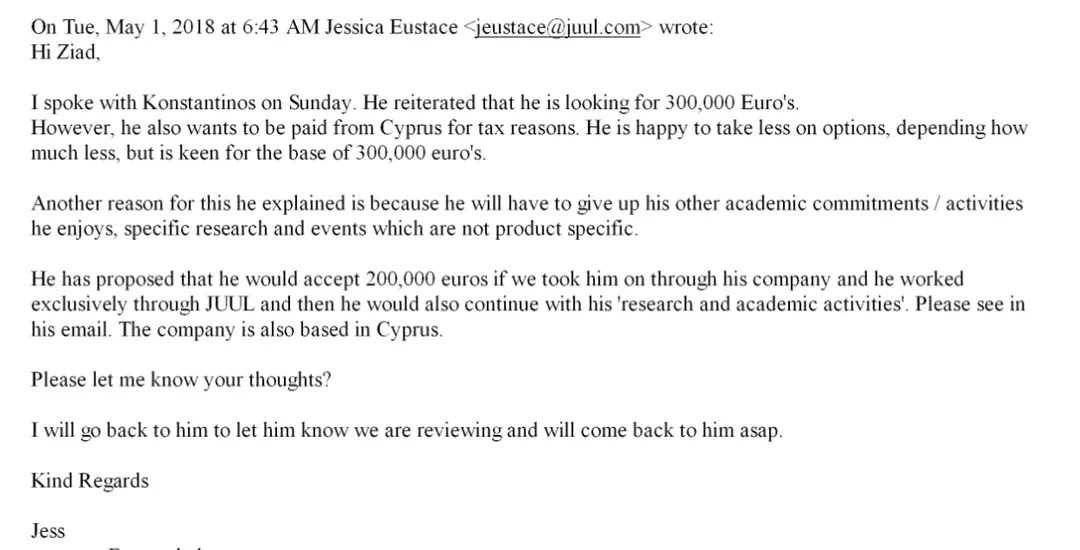
Greek cardiologist Konstantinos Farsalinos has been one of the e-cigarette industry’s most consistent supporters. Despite his behavior having all the hallmarks of undisclosed industry ties, until now no one was able to prove it. Now, using the Juul documents in the UCSF Industry documents library, investigators from The Examination, Le Monde (in English, in French)Continue reading “Juul’s Connection to ‘Independent’ Expert Farsalinos Revealed”
E-cigarettes increase harm to smokers, so should not be promoted as a harm reduction strategy (in 10 slides)
The tobacco industry has used claims of reduced harm to sell its products since the 1950s with its efforts to promote “safe cigarettes.” “Harm reduction” claims have been central to marketing of e-cigarettes since they were commercialized in 2003. The tobacco industry and its allies continue to use claims of reduced harm to argue againstContinue reading “E-cigarettes increase harm to smokers, so should not be promoted as a harm reduction strategy (in 10 slides)”
People who smoke both tobacco and cannabis are even more sensitive to paying more for cigarettes than those who just smoke cigarettes

Raising the cost of a pack of cigarettes, whether because of taxes or price hikes, has long been associated with lower consumption. The new paper Differential Responsiveness to Cigarette Prices by U.S. Adults Who Do and Do Not Use Cannabis by Tingting Yao and her UCSF colleagues shows that cigarette smokers who currently use cannabisContinue reading “People who smoke both tobacco and cannabis are even more sensitive to paying more for cigarettes than those who just smoke cigarettes”
Ecig enthusiasts acting more and more like tobacco and global warming deniers

Reflecting on the problems with the paper E-Cigarettes in Historical Context—Innovation, Risk, and Regulation by Michael Pesko, Jamie Hartmann-Boyce, Rachel Fung and Neal Benowitz reminded me that, as the evidence continues to pile up that e-cigarettes increase harm for both adults and youth, e-cigarette enthusiasts are moving beyond legitimate scientific differences of opinion and actingContinue reading “Ecig enthusiasts acting more and more like tobacco and global warming deniers”
New Pesko et al paper supporting e-cigs ignores current science

Several people have asked me what I thought of the just-published paper E-Cigarettes in Historical Context—Innovation, Risk, and Regulation by Michael Pesko, Jamie Hartmann-Boyce, Rachel Fung and Neal Benowitz. Like other similar papers published by some of these people, the Pesko paper relies on the 7 year old 2018 National Academies of Science, Engineering andContinue reading “New Pesko et al paper supporting e-cigs ignores current science”
International Pediatric Association publishes position paper concluding that “e-cigarettes are not an effective harm reduction strategy for adults and pose a serious risk to nicotine naïve youth”

On October 10, 2025, the International Pediatric Association (IPA) published a landmark position paper, “E-Cigarettes and the Nicotine Epidemic: Statement From the International Pediatric Association,” in Pediatrics, the international peer-reviewed journal published by the American Academy of Pediatrics. The paper concluded, “In contrast to early hopes and assumptions, e-cigarettes are not an effective harm reductionContinue reading “International Pediatric Association publishes position paper concluding that “e-cigarettes are not an effective harm reduction strategy for adults and pose a serious risk to nicotine naïve youth””
FDA Tobacco Products Scientific Advisory Committee should recommend against FDA allowing Philip Morris Products continuing to make misleading reduced risk claims about IQOS

FDA has scheduled a virtual meeting of its Tobacco Products Scientific Advisory Committee (TPSAC) meeting for October 7, 2025, to discuss the modified risk tobacco product (MRTP) renewal applications submitted by Philip Morris Products S.A. for several IQOS heated tobacco products that is happening despite the government shutdown. (Participants can attend via a live webcast.)Continue reading “FDA Tobacco Products Scientific Advisory Committee should recommend against FDA allowing Philip Morris Products continuing to make misleading reduced risk claims about IQOS”
FDA’s product standard setting a maximum level of nicotine should be expanded to all tobacco products including e-cigs and nicotine pouches

My colleagues at UCSF and Stanford and I have submitted this public comment to the FDA on its prposed nicotine standard urging that the standard be extended to all tobacco products (PDF). The regulations.gov Comment Tracking Number: mfj-v5cz-15yf. The scope of FDA’s proposed tobacco product standard setting a maximum level of nicotine in tobacco productsContinue reading “FDA’s product standard setting a maximum level of nicotine should be expanded to all tobacco products including e-cigs and nicotine pouches”
FDA setting a maximum level of nicotine in tobacco products without exceptions for HTP and waterpipe will improve health
My colleagues at UCSF and Stanford and I have submitted this public comment to the FDA supporting a product standard limiting nicotine in tobacco products and opposing exceptions for heated tobacco products and waterpipe (PDF). The Comment Tracking Number in regulations.gov is mfj-vc5x-sbgb .FDA’s proposed tobacco product standard setting a maximum level of nicotine inContinue reading “FDA setting a maximum level of nicotine in tobacco products without exceptions for HTP and waterpipe will improve health”
 Stanton Glantz blog