
The issue of redactions – both redacting names of victims and not redacting participants in Jeffery Epstein’s “social circle” — documents has been in the news. There have also been questions about why it took so long for DOJ to release around 3.5 million pages of documents, plus about 2,000 videos and 180,000 images. WorkingContinue reading “DOJ should have been able to easily release properly redacted Epstein files by December 19, 2025 based on our experience managing the UCSF Industry Documents Library”
Tag Archives: news
FDA broke the law when it did not allow TPSAC to vote on whether to allow PMI to make modified risk claims for ZYN

The FDA held a meeting of its Tobacco Products Scientific Advisory Committee (TPSAC) on January 22, 2026 to discuss Swedish Match’s application to make the modified risk tobacco product (MRTP) claim for its ZYN flavored nicotine pouches “Using ZYN instead of cigarettes puts you at a lower risk of mouth cancer, heart disease, lung cancer,Continue reading “FDA broke the law when it did not allow TPSAC to vote on whether to allow PMI to make modified risk claims for ZYN”
The gateway has two doors in England, too
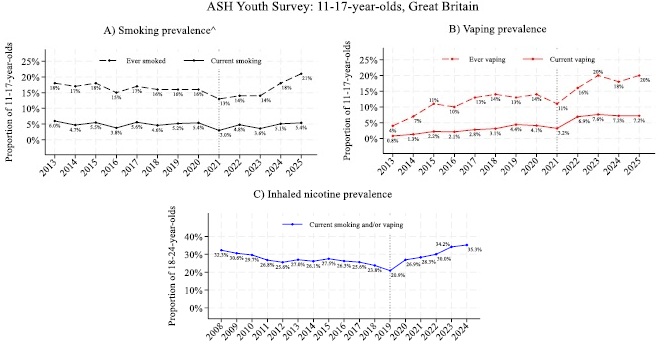
With some notable exceptions. e-cigarettes have been embraced by British tobacco control advocates and public health authorities more enthusiastically than anywhere else in the world, including authorities at Action on Smoking and Health (ASH) and University College London (UCL). Now, Emily Banks, Andrew Bush, Charlotta Pisinger, and Sam Egger have published Signs of increased smokingContinue reading “The gateway has two doors in England, too”
FDA should not authorize marketing ZYN nicotine pouches as having lower risk because the claim is likely to be misinterpreted to mean ZYN has been approved by FDA for cessation and consumers do not understand that they need to switch completely to get the purported benefits

My colleagues at UCSF and Stanford have submitted this public comment to FDA opposing its approval of Swedish Match (owned by Philip Morris International) claim that ZYN is less dangerous because it will be misunderstood as saying FDA endorsed ZYN (PDF). The TPSAC tracking number is mk4-kxvh-7j9n and the general docket tracking number is mk5-q1p5-yauhContinue reading “FDA should not authorize marketing ZYN nicotine pouches as having lower risk because the claim is likely to be misinterpreted to mean ZYN has been approved by FDA for cessation and consumers do not understand that they need to switch completely to get the purported benefits”
FDA should not authorize marketing flavored ZYN nicotine pouches as modified risk products because Swedish Match failed to provide evidence specific to ZYN demonstrating that they will benefit the health of the population, including youth

My colleagues at UCSF and Stanford have submitted this public comment to FDA opposing its approval of Swedish Match (owned by Philip Morris International) claim that ZYN is less dangerous (PDF). The TPSAC tracking number is mk4-k6rg-rvku and the general docket tracking number is mk5-q1p5-yauh on Regulations.gov. Here is the comment: FDA’s should not authorizeContinue reading “FDA should not authorize marketing flavored ZYN nicotine pouches as modified risk products because Swedish Match failed to provide evidence specific to ZYN demonstrating that they will benefit the health of the population, including youth”
New paper by Hajek group presents misleading incomplete results about dual use when using e-cigs as cessation aid

One concern about giving smokers e-cigarettes as a smoking cessation aid is that doing so instantly converts them into dual users (smoking both cigarettes and e-cigarettes), which adds the risks of e-cigarette use to cigarette use. Peter Hajek’s group just published Patterns of e-Cigarette Use and Smoking Cessation Outcomes: Secondary Analysis of a Large RandomisedContinue reading “New paper by Hajek group presents misleading incomplete results about dual use when using e-cigs as cessation aid”
National Academy of Medicine calls out CDC for misrepresenting NAM position on vaccines and autism

This blog focuses on tobacco and cannabis and public health, so I have refrained from commenting on broader public health issues. But, I am making an exception to disseminate the National Academy of Medicine’s statement pointing of that the CDC’s November 12, 2025 update to its webpage on autism misrepresented NAM’s position on vaccines andContinue reading “National Academy of Medicine calls out CDC for misrepresenting NAM position on vaccines and autism”
Plain language summary of meta-analysis of ecigs and disease available
Last year we published “Population-Based Disease Odds for E-Cigarettes and Dual Use versus Cigarettes” that showed that some disease risks of e-cigarettes are indistinguishable from cigarettes and for others they on only slightly lower. This paper continues to attract interest, so I prepared a one page plain language summary, together with some frequently asked questions.Continue reading “Plain language summary of meta-analysis of ecigs and disease available”
How e-cigarettes compromise children’s human rights

The new paper “How e-cigarettes compromise children’s human rights” by Tom Gatehouse and colleagues provides more evidence to inform e-cigarette policy making by reminding the delegates to the FCTC Conference of the Parties next week that they need to prioritize protecting kids over any “harm reduction” benefits for adults that the tobacco industry claims forContinue reading “How e-cigarettes compromise children’s human rights”
E-cigarettes increase harm to smokers, so should not be promoted as a harm reduction strategy (in 10 slides)
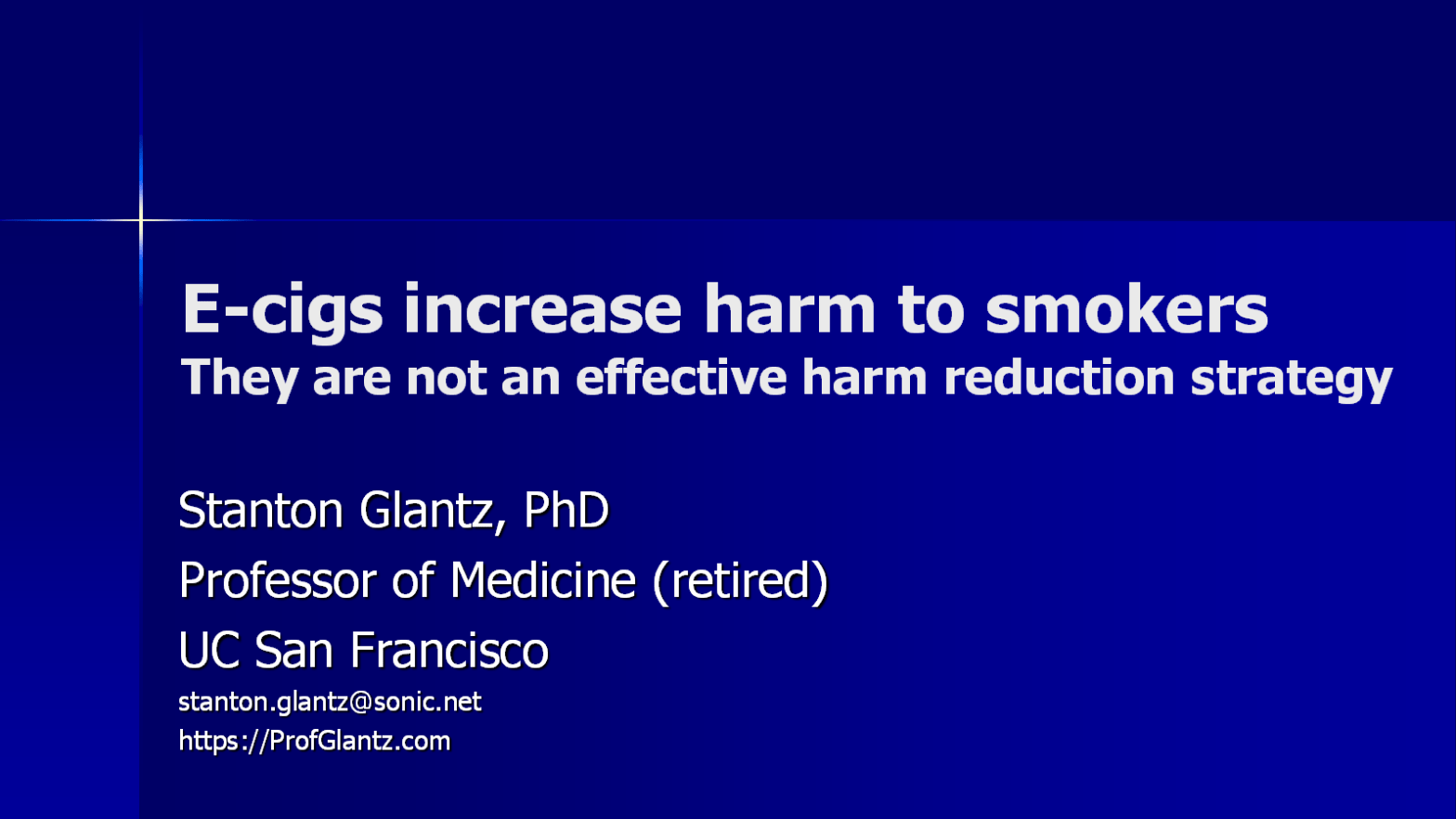
The tobacco industry has used claims of reduced harm to sell its products since the 1950s with its efforts to promote “safe cigarettes.” “Harm reduction” claims have been central to marketing of e-cigarettes since they were commercialized in 2003. The tobacco industry and its allies continue to use claims of reduced harm to argue againstContinue reading “E-cigarettes increase harm to smokers, so should not be promoted as a harm reduction strategy (in 10 slides)”
 Stanton Glantz blog