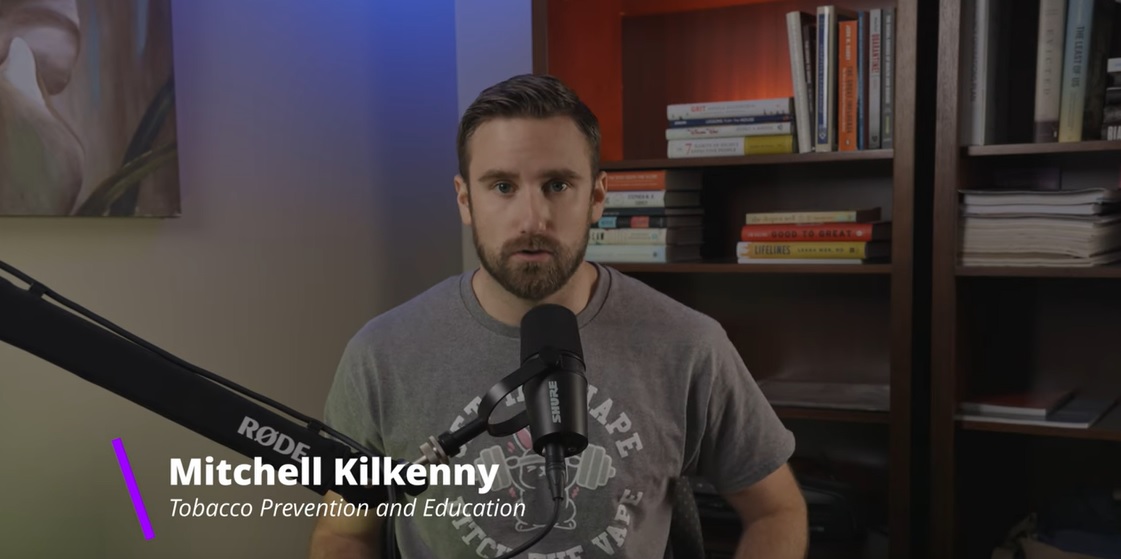
Douglas County Oregon Public Health recently released an hour long interview Mitchell Kilkenny conducted with me covering everything from how I got involved with tobacco control through secondhand smoke’s effects to our recent research showing that for for many diseases e-cigarettes have indistinguishable risks to smoking, why the tobacco free generation” is a bad idea,Continue reading “Wide-ranging podcast with ProfGlantz”
Category Archives: smoking
Genetic evidence that e-cigarettes increase cancer (and other disease) risk among young adults

E-cigarette advocates — as well as regulators like the FDA — are fond of pointing out that nicotine is not a carcinogen (chemical that causes cancer) and noting that because they do not involve combustion, e-cigarettes do not deliver many carcinogenic chemicals produced by burning cigarettes. A new paper by Stella Tommasi , Ahmad BesaratiniaContinue reading “Genetic evidence that e-cigarettes increase cancer (and other disease) risk among young adults”
Criticism of our meta-analysis of e-cigarettes and disease and our response is published

NEJM Evidence has published two letters to the editor that raised questions about our meta-analysis, Population-Based Disease Odds for E-Cigarettes and Dual Use versus Cigarettes that concluded that for cardiovascular disease, stroke and metabolic disorder e-cigarette risks are similar to cigarettes and for respiratory and oral disease, while lower risk than cigarettes, the risks areContinue reading “Criticism of our meta-analysis of e-cigarettes and disease and our response is published”
New meta-analysis of e-cigs and cardiovascular disease shows increased risks

Chen Chen and colleagues recently published Assessing the association between e-cigarette use and cardiovascular disease: A meta-analysis of exclusive and dual use with combustible cigarettes that found significantly elevated cardiovascular disease risk in dual users (people who use both e-cigarettes and cigarettes) and former smokers who had switched to e-cigarettes compared to people who hadContinue reading “New meta-analysis of e-cigs and cardiovascular disease shows increased risks”
Tobacco free generation is a bad idea that should be abandoned

In the last few years the idea of a free generation in which tobacco sales would be prohibited to all people born after a certain date has gained some traction. Ever since the idea was first proposed by some Singapore researchers in 2010, I have thought it was a bad idea. Other than declining toContinue reading “Tobacco free generation is a bad idea that should be abandoned”
Cannabis associated with bad COVID-19 outcomes, like tobacco

Many studies have shown that current and past tobacco use is associated with poorer outcomes among people infected with COVID-19. Now Nicholas Griffin and colleagues have published a large well-done study showing that cannabis use is also associated with poorer outcomes among people who have developed COVID-19. The collected data on cannabis and tobacco useContinue reading “Cannabis associated with bad COVID-19 outcomes, like tobacco”
Implications of new RCT showing similar effects on quitting for nicotine e-cigs vs varenicline

Almost all the randomized controlled trials of e-cigarettes as clinical interventions for smoking cessation have compared e-cigarettes to nicotine replacement therapy. Varenicline, which is a prescription medication that works by blocking nicotine receptors rather than replacing the nicotine that cigarettes provide, is more effective than NRT. Anna Tsiku and colleagues new paper “Electronic Cigarettes vsContinue reading “Implications of new RCT showing similar effects on quitting for nicotine e-cigs vs varenicline”
Recording of ProfGlantz June 4 presentation “Are ecigs safer than regular cigs?” is now available
On June 4, 2004, I gave a presentation to the Clean Air Coalition of British Columbia, which includes the Heart and Stroke Foundation and the Canadian Cancer Society, entitled “Are E-Cigarettes Safer than Regular Cigarettes?” Several people asked if I a recording was available. It is. The link is https://us02web.zoom.us/rec/share/rz8sgGt3JyCFS-wWHJJE94ynyXkVsqNOjKUnxnrHsKJbhcTo-_MQDQUxf_Kl0PYf.E35DQkP5nljY9V95 Passcode: ?FCk!$3& An open accessContinue reading “Recording of ProfGlantz June 4 presentation “Are ecigs safer than regular cigs?” is now available”
ProfGlantz to give public Zoom presentation on disease risks of e-cigarettes on June 4
On Tuesday June 4, 2024 I will be giving a presentation to the Clean Air Coalition of British Columbia Knowledge Exchange, which includes the Heart and Stroke Foundation and the Canadian Cancer Society at 9 to 10 AM Pacific Time. This presentation, which will be designed for a non-technical audience, will include a discussion ofContinue reading “ProfGlantz to give public Zoom presentation on disease risks of e-cigarettes on June 4”
Tobacco companies use subliminal menthol to achieve the same goals as menthol as a characterizing flavor. Regulators should prohibit all menthol, not just as a characterizing flavor.

While most countries, including the US FDA, regulate menthol as a “characterizing flavor” — at levels that impart a discernible taste — previously secret tobacco industry documents show that tobacco companies have long used menthol at subliminal levels — below levels that impart a discernible taste — to reduce smoke harshness, reduce dryness, increase smokeContinue reading “Tobacco companies use subliminal menthol to achieve the same goals as menthol as a characterizing flavor. Regulators should prohibit all menthol, not just as a characterizing flavor.”

