
I previously published three detailed critiques of the 2024 UK Royal College of Physicians report E-cigarettes and Harm Reduction: An Evidence Review for being an incomplete and selective review of the literature in three areas — underestimating the magnitude of disease risk caused by e-cigarettes, ignoring the large body of real world evidence that e-cigarettesContinue reading “The RCP got this right: Promotion of tobacco harm reduction is playing right into the tobacco industry’s hands”
Category Archives: smoking cessation
Smokers who use e-cigs as for smoking cessation are more likely to end up dual users than to “switch completely” or stop smoking and vaping

E-cigarette enthusiasts, including the FDA and the NHS and others in England, and some in New Zealand and Canadian governments continue to promote “switching completely” from cigarettes to e-cigarettes as a form of harm reduction. I just found another paper that shows that the reality is that adult smokers who use e-cigarettes as a smokingContinue reading “Smokers who use e-cigs as for smoking cessation are more likely to end up dual users than to “switch completely” or stop smoking and vaping”
Register for free UCSF indusry documents workshop Oct 8

Registration is now open for the UCSF Annual Tobacco and Other Industry Documents Workshop. The workshop, which is a joint project of UCSF’s Center for Tobacco Control Research and Education and the UCSF Library will again be held virtually on October 8th from 9am-12:15pm Pacific Time. Participants will gain comprehensive knowledge of UCSF’s Industry DocumentsContinue reading “Register for free UCSF indusry documents workshop Oct 8”
Wide-ranging podcast with ProfGlantz
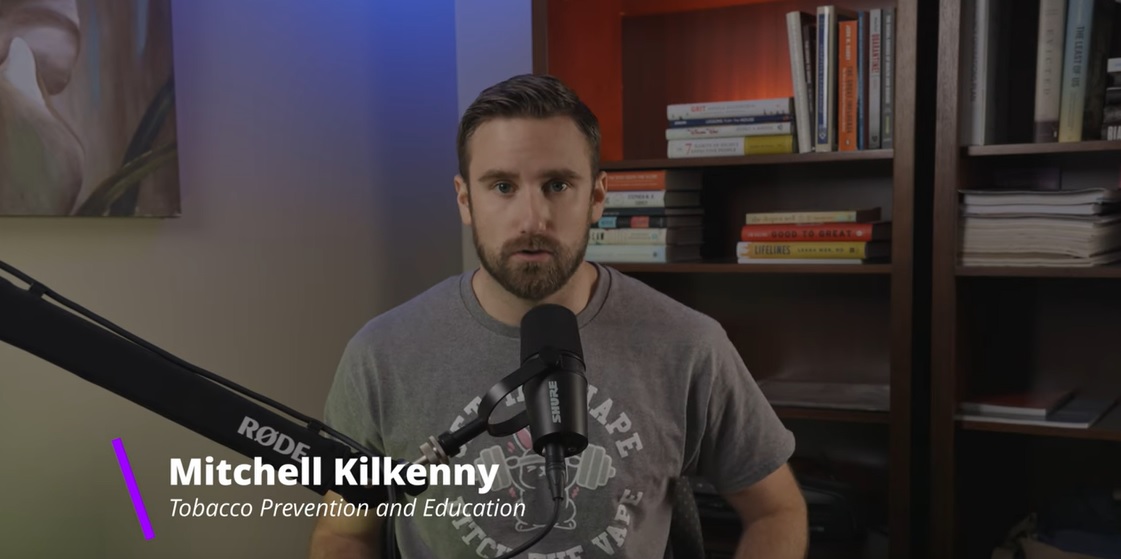
Douglas County Oregon Public Health recently released an hour long interview Mitchell Kilkenny conducted with me covering everything from how I got involved with tobacco control through secondhand smoke’s effects to our recent research showing that for for many diseases e-cigarettes have indistinguishable risks to smoking, why the tobacco free generation” is a bad idea,Continue reading “Wide-ranging podcast with ProfGlantz”
Implications of new RCT showing similar effects on quitting for nicotine e-cigs vs varenicline
Almost all the randomized controlled trials of e-cigarettes as clinical interventions for smoking cessation have compared e-cigarettes to nicotine replacement therapy. Varenicline, which is a prescription medication that works by blocking nicotine receptors rather than replacing the nicotine that cigarettes provide, is more effective than NRT. Anna Tsiku and colleagues new paper “Electronic Cigarettes vsContinue reading “Implications of new RCT showing similar effects on quitting for nicotine e-cigs vs varenicline”
Tobacco companies use subliminal menthol to achieve the same goals as menthol as a characterizing flavor. Regulators should prohibit all menthol, not just as a characterizing flavor.

While most countries, including the US FDA, regulate menthol as a “characterizing flavor” — at levels that impart a discernible taste — previously secret tobacco industry documents show that tobacco companies have long used menthol at subliminal levels — below levels that impart a discernible taste — to reduce smoke harshness, reduce dryness, increase smokeContinue reading “Tobacco companies use subliminal menthol to achieve the same goals as menthol as a characterizing flavor. Regulators should prohibit all menthol, not just as a characterizing flavor.”
Glantz and Duffy appear on The Newsmakers to discuss England’s misguided approach to ecigs

Last week Sheila Duffy, Chief Executive of ASH Scotland, appeared in an English language episode of Turkish Radio and Television Corporation‘s “The Newsmakers” to discuss England’s approach to e-cigarettes. They also has the director of the tobacco industry front group Consumer Choice Center. Sheila was quite strong in pointing out that Scotland, Wales and IrelandContinue reading “Glantz and Duffy appear on The Newsmakers to discuss England’s misguided approach to ecigs”
Why is the Royal College of Physicians concluding the ecigs help smokers quit when a large body of evidence shows that, as consumer products, they don’t?
On April 18, 2024 the UK Royal College of Physicians published E-cigarettes and Harm Reduction: An Evidence Review, the latest in a series of reports it has published since 2007 endorsing e-cigarettes for harm reduction. In this report, the RCP recommends that “e-cigarettes should be promoted as an effective means of helping people who smokeContinue reading “Why is the Royal College of Physicians concluding the ecigs help smokers quit when a large body of evidence shows that, as consumer products, they don’t?”
More people are stopping smoking since advent of fourth gen e-cigs. Less disease? Probably not.

Karin Kasza and colleagues new well-done study, “Divergence in Cigarette Discontinuation Rates by Use of Electronic Nicotine Delivery Systems (ENDS): Longitudinal Findings From the United States PATH Study Waves 1-6,” uses the large national PATH study to see if there were differences in real-world trends of adults stopping smoking before and after fourth generation e-cigarettesContinue reading “More people are stopping smoking since advent of fourth gen e-cigs. Less disease? Probably not.”
Smoking cessation quickly reduces mortality, within 3 years

It’s been long-established that quitting smoking prolongs life and that quitting young (below about 40) eliminates all or almost all the mortality costs of smoking. The new paper Smoking Cessation and Short- and Longer-Term Mortality by Eo Rin Cho and colleagues extends this case to more recent data and from several countries. While they confirmContinue reading “Smoking cessation quickly reduces mortality, within 3 years”
 Stanton Glantz blog