
One February 24, 2022, the FDA submitted two proposed rules on menthol to the White House Office of Management and Budget for review before public release: “Tobacco Product Standard for Menthol in Cigarettes” and “Tobacco Product Standard for Characterizing Flavors in Cigars.” The OMB can approve the proposed rules as submitted, deny them, or approveContinue reading “Proposed FDA menthol rules sent to Biden OMB for approval before release for public comment”
Category Archives: smoking
AT&T makes Colin Farrell’s Penguin in The Batman smokefree

GeekTyrant reported that Colin Farrell’s Penguin in the new The Batman film being released by AT&T‘s Warner Bros. will be smokefree. Farrell’ wanted Penguin to smoke, but AT&T said “no.” Farrell’s view: “Big studios make big decisions around such things as the presence of cigarettes in films. I fought valiantly for a cigar. At oneContinue reading “AT&T makes Colin Farrell’s Penguin in The Batman smokefree”
Altria’s electronic age verification system is used to gather consumer data and promote products
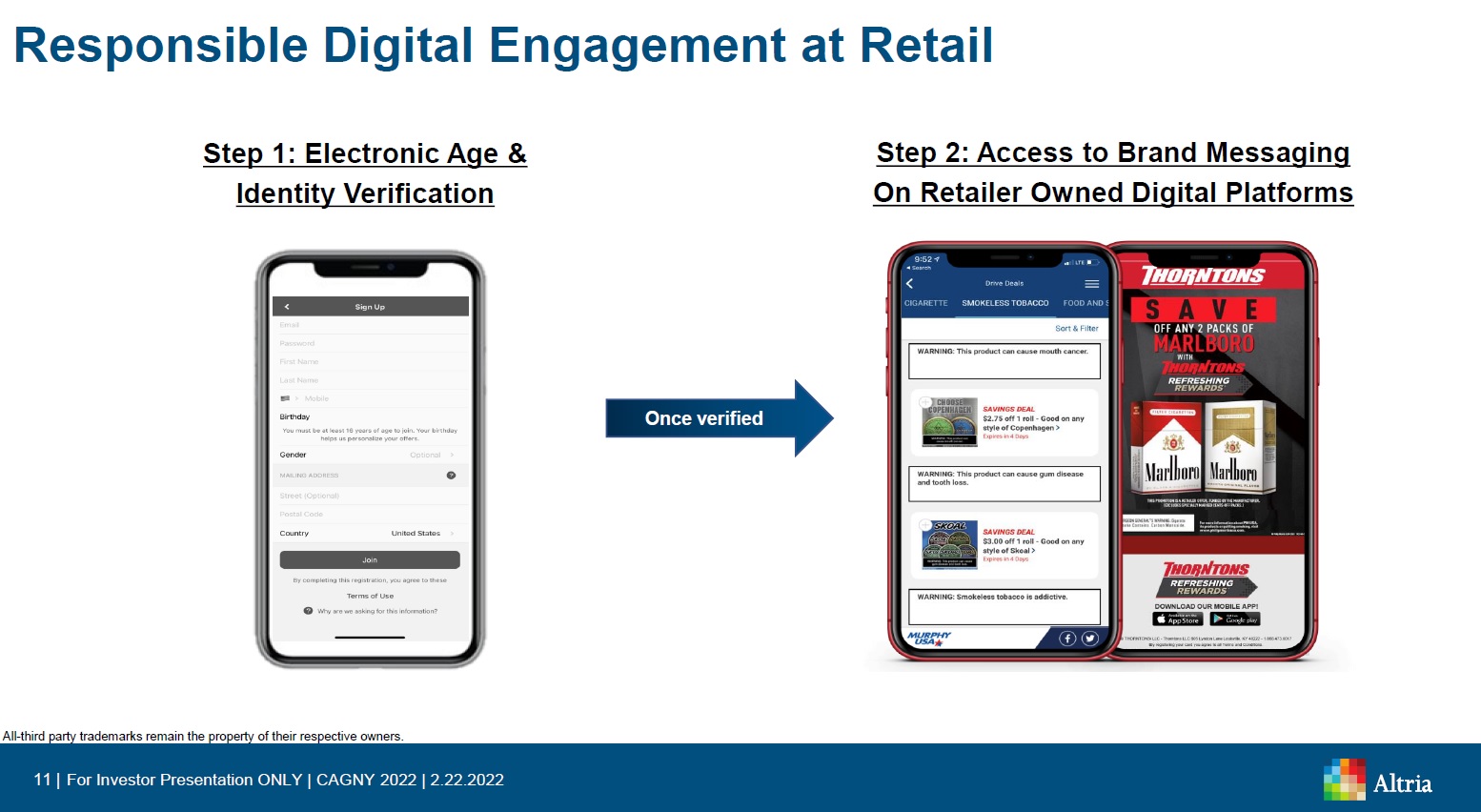
The tobacco companies, including e-cig company Juul, tout their electronic age verification technology as an effective way to reduce youth use and argue against stricter regulation. I have long been concerned that this technology would also allow the companies to collect marketing information that couple be used to promote their products the second that theyContinue reading “Altria’s electronic age verification system is used to gather consumer data and promote products”
Tremendous new resource on tobacco industry issue ads now available

Rob Jackler just published Propaganda Crusades by Philip Morris International & Altria: “Smoke-Free Future” & “Moving Beyond Smoke” Campaigns Exposing the Hypocrisy of the Claim: “A Tobacco Company That Actually Cares About Health,” an encyclopedic analysis of Philip Morris and Altria’s issue advertising campaigns claiming that the companies have changed from promoting death for profitContinue reading “Tremendous new resource on tobacco industry issue ads now available”
More real world evidence that e-cigs make it harder to quit cigarettes

The evidence that e-cigarettes do not work for smoking cessation just keeps piling up. The latest high quality real world study, “Effectiveness of e-cigarettes as aids for smoking cessation: evidence from the PATH Cohort Study, 2017-19,” published by Ruifeng Chen and colleagues at UCSD in Tobacco Control reports on the association between e-cigarette use andContinue reading “More real world evidence that e-cigs make it harder to quit cigarettes”
A wide range of e-cigarettes similarly harm artery function as much as cigarettes

The whole harm reduction and reduced exposure frameworks that the FDA and others use to assess alternative inhaled tobacco products assumes that the specific details of the aerosol that these products deliver to users has a substantial effect on risks. New research by Poonam Rao, Matt Springer, and their colleagues at UCSF raises serious questionsContinue reading “A wide range of e-cigarettes similarly harm artery function as much as cigarettes”
High school student use of cigarettes and e-cigarettes fell after the San Francisco flavor ban took effect
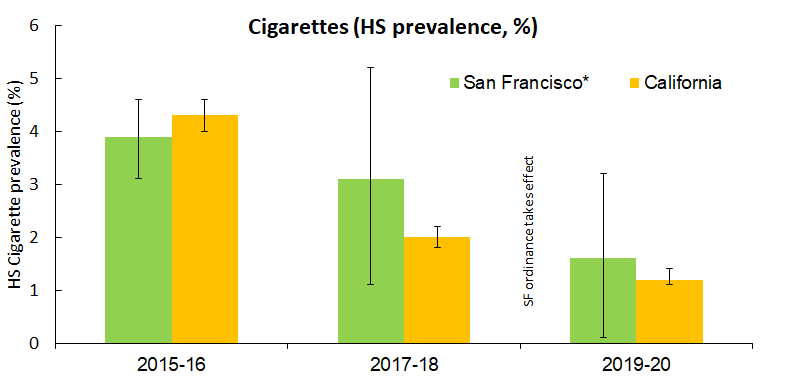
San Francisco’s experience continues to be a central issue as localities and states continue to debate legislation ending the sale of flavored tobacco products, including the tobacco companies’ effort to overturn California’s flavor ban by forcing a referendum on it. Results from the 2019-20 California Student Tobacco Survey show that that, compared to the surveyContinue reading “High school student use of cigarettes and e-cigarettes fell after the San Francisco flavor ban took effect”
The e-cig gateway has two doors

When people talk about the “gateway effect” of e-cigarettes, they are usually referring to the first gateway: the fact that never-smoking kids who initiate nicotine use with e-cigarettes are more likely to start smoking cigarettes than youth who never try e-cigarettes. E-cig enthusiasts dismiss these studies by invoking the “common liability” theory which asserts thatContinue reading “The e-cig gateway has two doors”
Ecig enthusiasts respond to criticism that they selectively cited the science by ignoring the conclusions of the papers they do cite

In addition to the excellent paper by Samet and Barrington-Trimis the American Journal of Public Health recently published two letters to the editor — one from Wasim Maziak and one from me — criticizing the paper “Balancing consideration of the risks and benefits of e-cigarettes.” That paper argues that concerns over youth e-cigarette use needsContinue reading “Ecig enthusiasts respond to criticism that they selectively cited the science by ignoring the conclusions of the papers they do cite”
E-cigs: What about helping the smokers?

A lot of the discussion of e-cigarettes has been about the millions of youth who are starting nicotine addiction with them. While the tobacco companies are obvious beneficiaries of this fact, no one — not even the companies — publicly claims that this is a good thing. The goal is to “help addicted smokers quitContinue reading “E-cigs: What about helping the smokers?”

