
Last week the FDA and CDC released their analysis of the 2024 National Youth Tobacco Survey. The 2024 report moved beyond earlier FDA and CDC summaries of NYTS results by including details on how heavily youth were using e-cigarettes and nicotine pouches, as well as details on brand preferences and specific flavor preferences, including “ice” and concept (with names like solar, purple and jazz) flavors. These are important additions.
The FDA summarized the e-cigarette results:
Current Use
- 5.9% of middle and high school students (1.63 million) reported current use of e-cigarettes
- 7.8% (1.21 million) high school students and 3.5% (410,000) middle school students reported current use of e-cigarettes
Frequency of Use
- More than 1 in 4 (26.3%) of current youth e-cigarette users use an e-cigarette product daily
- More than 1 in 3 (38.4%) youth e-cigarette users report using e-cigarettes at least 20 of the last 30 days
Flavored E-Cigarette Use
- More than 8 out of 10 current e-cigarette users (87.6%) used flavored e-cigarettes, with fruit flavors being the most popular, followed by candy, desserts, or other sweets; mint; and menthol
- Over half (54.6%) of students currently using e-cigarettes reported using flavors with “ice” or “iced” in the name
Type of Device
- The most commonly used device among current e-cigarette users was disposables (55.6%), followed by prefilled/refillable pods or cartridges (15.6%)
Commonly Used Brands
- The most commonly reported brands reported among current e-cigarette users were: Elf Bar (36.1%), Breeze (19.9%), Mr. Fog (15.8%), Vuse (13.7%) and JUUL (12.6%)
The report noted that, “In 2024, an estimated 1.63 million U.S. middle and high school
students currently used e-cigarettes, a significant decline from 2.13 million in 2023.” This good news is tempered by the fact that the whole drop was among high school students, with middle school use not changing significantly. A big question is what will happen as the middle school students age into high school. Will high school use continue drop or will it stabilize or even increase?
The report’s emphasis on heavy use (more than 20 days per month) is important, particularly since in the past e-cigarette advocates have said that, while lots of youth were using e-cigarettes, they weren’t using them all that often. The fact that in 2024 38.4% of young e-cig users were heavy users is consistent with past growth of heavily addicted youth after the introduction of nicotine salts (protonated nicotine) pioneered by Juul, which makes the nicotine earlier to inhale. The effect of introducing this more addictive form of nicotine is evident from the shift toward more days per month we found since 2020 after Juul penetrated the youth market beginning around 2016:
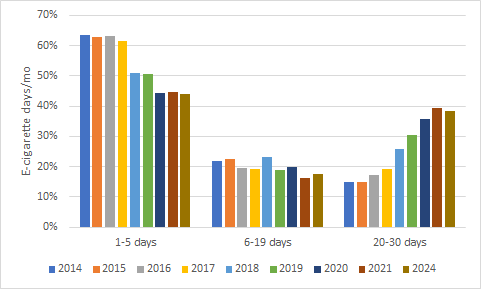
By this measure, 4th generation e-cigarettes modeled on Juul are a lot more addictive than conventional cigarettes. In 2021 “only” 18.9% of young smokers smoked 20-30 days a month, less than half the 39.4% of youth who used e-cigarettes 20-30 days/month.
The implication: FDA can reduce adolescent nicotine addiction, they should prohibit use of nicotine salts, which are now widely used in e-cigarettes and nicotine pouches.
The sleeper finding: High use of nicotine pouches
The FDA/CDC report also found a substantial number of youth using nicotine pouches, led by Philip Morris’ Zyn:
Current Use
- 1.8% of students (480,000) reported current use of nicotine pouches
Frequency of Use
- More than 2 in 10 (22.4%) youth nicotine pouch users report using nicotine pouches daily
- More than 1 in 4 (29.3%) youth nicotine pouch users report using nicotine pouches at least 20 of the last 30 day
Flavored Nicotine Pouch Use
- More than 8 out of 10 current nicotine pouch users (85.6%) used flavored nicotine pouches, with mint flavors being the most popular, followed by fruit
Commonly Used Brands
- The most commonly reported brands reported among current nicotine pouch users were: Zyn (68.7%), on! (14.2%), Rogue (13.6%), Velo (10.7%) and Juice Head ZTN (9.8%)
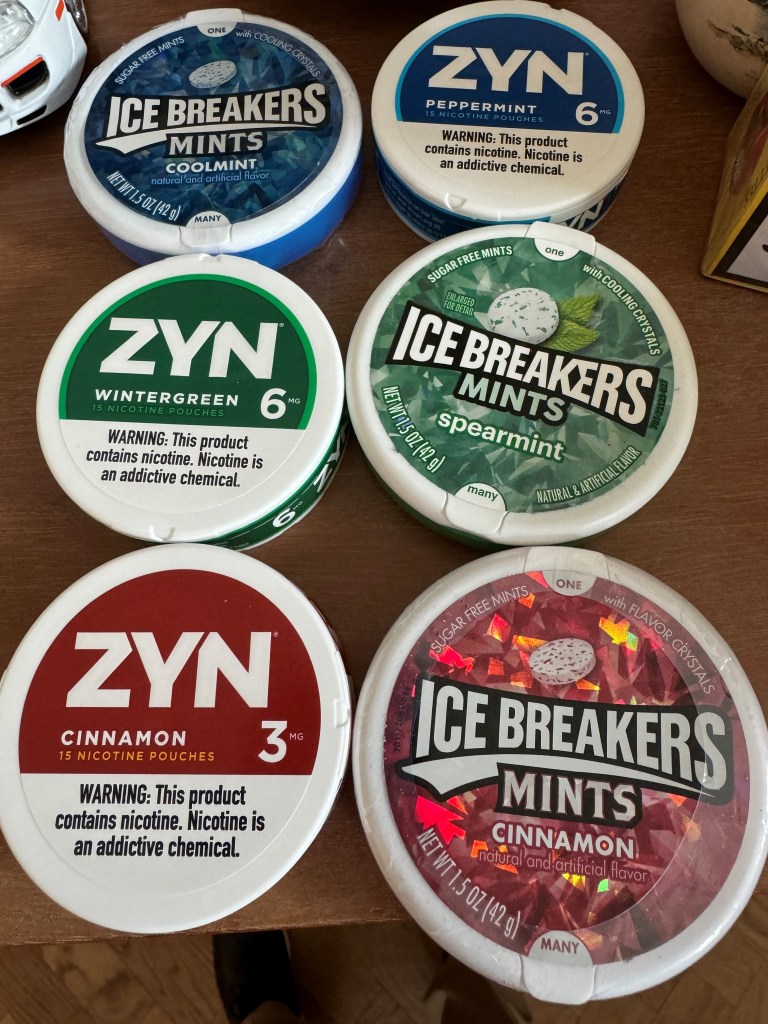
Contrary to what CDC (and FDA) say, 1.8% is not “low.” Zero would be low. More important, while much lower than e-cigarette market penetration today, it is nearly double (1.7x) the 1.1% use level in 2022. The FDA needs to not repeat its mistake of not acting because prevalence is “low”, particularly given the substantial fraction of heavily addicted young users.
Fortunately, there is something the FDA can do right now: FDA is considering Philip Morris’ application to renew its “Modified risk tobacco product” (MRTP) authorization that allows it to advertise that Zyn is reduced risk, which makes them more attractive to youth. My UCSF colleagues and I have submitted two public comments (comment 1, comment 2) arguing that, based on actual use, allowing such claims is not “appropriate for the protection of public health”, the legal standard for allowing such claims. FDA can and should use the new data in its analysis of the 2024 NYTS to not renew Philip Morris’ authorization to make “modified risk” claims about Zyn.
 Stanton Glantz blog