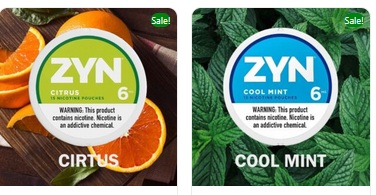
My colleagues at UCSF and Stanford have submitted this public comment to FDA opposing its approval of Swedish Match (owned by Philip Morris International) claim that ZYN is less dangerous because it will be misunderstood as saying FDA endorsed ZYN (PDF). The TPSAC tracking number is mk4-kxvh-7j9n and the general docket tracking number is mk5-q1p5-yauh on Regulations.gov.
FDA should not authorize the marketing of 20 flavored ZYN nicotine pouches with the modified risk claim, “Using ZYN instead of cigarettes puts you at a lower risk of mouth cancer, heart disease, lung cancer, stroke, emphysema, and chronic bronchitis” because the claim is likely to be misinterpreted to mean that ZYN nicotine pouches have been approved by FDA for cessation and consumers do not understand that they need to switch completely to get the purported benefits
Docket No. FDA-2025-N-0835 for “Modified Risk Tobacco Product Applications:
Applications for ZYN oral pouch products containing nicotine derived from tobacco submitted by Swedish Match U.S.A., Inc.’’
Lauren Lempert JD, MPH; Pamela Ling, MD; MPH; Benjamin Chaffee, DDS, MPH, PhD; Bonnie Halpern-Felsher, PhD;1 Stanton A. Glantz, PhD; Stella A Bialous, DrPH, FAAN; Dorie E. Apollonio, PhD MPP
University of California, San Francisco
1 Stanford University School of Medicine, Department of Pediatrics
January 7, 2026
Swedish Match has applied for permission to market 20 flavored ZYN nicotine pouches (Chill, Cinnamon, Citrus, Coffee, Cool Mint, Menthol, Peppermint, Smooth, Spearmint, and Wintergreen in two nicotine strengths – 3 mg and 6 mg) with the modified risk claim, “Using ZYN instead of cigarettes puts you at a lower risk of mouth cancer, heart disease, lung cancer, stroke, emphysema, and chronic bronchitis.”[1]To be granted a Modified Risk Tobacco Product (MRTP) order permitting marketing ZYN with this claim, the company must demonstrate that the product, as actually used byconsumers, will continue to both:
1) Significantly reduce harm and the risk of tobacco-related disease to individual tobacco
users; and
2) Benefit the health of the population as a whole taking into account both users of tobacco products and persons who do not currently use tobacco products.[2]
ZYN is not an FDA-approved nicotine replacement therapy (NRT), and Swedish Match did not and cannot demonstrate that ZYN could be used for cessation. Nevertheless, the aggressive marketing for ZYN nicotine pouches and the proposed MRTP marketing claims imply that these products can be used for cessation. These implied cessation messages are already reaching young people and motivating trial: a 2022 survey of US young adults found that the most common motivation for nicotine pouch use was to quit other tobacco products.[3] Moreover, FDA’s authorization of ZYN as a MRTP product would likely be misinterpreted by consumers to mean that FDA has approved ZYN for cessation, which would both harm individual users and the population as a whole.
Specifically, the scientific evidence indicates that FDA authorization of ZYN’s proposed modified risk statement would likely be misinterpreted by consumers as indicating that ZYN is approved as safe or effective for cessation. FDA should deny the requested MRTP authorization.
- FDA-authorized MRTP claims for ZYN are likely to be interpreted as FDA approval.
FDA-authorized MRTP claims are frequently misinterpreted to mean that FDA has “approved” the MRTP-authorized product as “safe and effective” and/or as a product that can be used for cessation. This is especially concerning because this misunderstanding would likely increase the appeal of these products to nicotine-naïve youth, thus increasing the likelihood that they will initiate tobacco use with these products.
In a 2022 qualitative examination of perceptions of FDA MRTP authorization messages with similar statements about the heated tobacco product IQOS,[4] participants were shown the message: ‘Scientific studies show that switching completely from cigarettes to IQOS reduces your body’s exposure to harmful or potentially harmful chemicals’ and then asked, “What do you think this message is saying? How persuasive is it? How much does it make you want to [try/switch to IQOS]? What does this message make you think about the harms of IQOS?” Participants then viewed the message: ‘Scientific studies show that switching completely from cigarettes to IQOS can reduce the risks of tobacco-related diseases’ and were asked, “What is the difference between these 2 statements? Which is more convincing?” They found that the majority of participants saw no difference between the reduced exposure versus risk messages and interpreted them to mean the same thing. Furthermore, when study participants were shown the statement indicating FDA endorsement, “A US FDA examination concluded that IQOS is a better choice for adult smokers,” the mention of the FDA enhanced credibility, and was interpreted as indicating “real scientific testing” done by the regulatory agency supported the use of the product. This outcome is particularly disconcerting in the case of ZYN because most of the research supporting the use of ZYN for “harm reduction” is industry-supported research.[5], [6]
A 2024 study[7] looking at the effects of a reduced risk claim on adolescents’ perceptions of and willingness to use smokeless tobacco (Copenhagen Snuff) found that brief exposure to a reduced risk claim on a hypothetical advertisement decreased adolescents’ perceptions of harm of smokeless tobacco and increased the willingness to try Copenhagen Snuff among existing tobacco users. In this study, participants saw a photograph of an unopened Copenhagen moist snuff container with the follow text above the image: “IF YOU SMOKE, CONSIDER THIS: switching completely to this product from cigarettes reduces risk of lung cancer” and an FDA-mandated warning below the image: “WARNING: This product can cause mouth cancer” (Figure1). In the control arm (control image), participants saw the same container image and warning label, but the reduced risk claim was not visible (Figure 1).
Adolescents who viewed the image on the left with the MRTP message were significantly less likely to perceive smokeless tobacco and harmful than those in the control (right image) condition. Among past-30-day tobacco users in the study, those who viewed the MRTP message were significantly more likely to indicate willingness to use smokeless tobacco when asked the question, “If one of your best friends were to offer you Copenhagen Snuff, would you use it?”
Another 2024 study[8] analyzing the impacts of MRTP claims about IQOS heated tobacco products found that among adult smokers, those who viewed MRTP claims (e.g., reduced exposure: “Switching completely from cigarettes to IQOS will reduce exposure to smoke chemicals,” or reduced risk: “Switching completely from cigarettes to IQOS will reduce the risk of smoking-related diseases”) reported significantly higher willingness to try IQOS and a lower perceived risk of disease and exposure to harmful products for complete switching from cigarettes. Additionally, MRTP claims promoted unintended halo effects such as lower perceived risk of disease for both complete switching and for partial switching (i.e., continuing to both use IQOS and cigarettes). This is problematic because the predominant use pattern for nicotine pouches (as well as for IQOS) is dual use, not complete switching. Two switching studies have found that only 20% of adult smokers completely switched to IQOS while 80% ended up dual using both IQOS and cigarettes.[9],[10]
Because nicotine pouches are marketed as more discrete alternatives to combustible cigarettes or e-cigarettes that can be used anywhere, they are susceptible to situational, rather than substitutional use, further increasing the likelihood of dual use, rather than complete switching to nicotine pouches.[11]
FDA’s PMTA marketing authorization of ZYN nicotine pouches to be used as recreational products clearly did not mean that the products were approved by FDA for cessation. However, an Instagram video[12] posted in January 2025, shortly after FDA authorized the marketing of ZYN pouches encourages misinterpretation. The still image features a prominent, red banner stating in large font, “FDA APPROVES ZYN!!” The text and video states that FDA cited ZYN’s “potential to help adult smokers cut back or quit.” Instagram posts such as this are widely seen by youth and young adults.[13]
Products like ZYN pouches that contain nicotine but are marketed as “tobacco-free” are perceived as less harmful than tobacco-derived products, especially among young adults. This is concerning because perceiving nicotine pouches as less harmful is associated with product awareness, susceptibility, and use.[14]
Further, confusion about the meaning of FDA’s MRTP marketing authorization of IQOS has been exploited by Philip Morris to market IQOS overseas and to press governments to reverse policies regulating sales of similar products.[15]
The proposed MRTP statement for ZYN invites similar abuses by Philip Morris International, which owns Swedish Match and ZYN.
- Consumers do not understand that they need to switch completely from using cigarettes to get the purported benefits
A 2024 study[16] analyzing the impacts of MRTP claims about IQOS heated tobacco products found that MRTP claims elicited a higher willingness to try the product and a lower perceived risk of disease and exposure to harmful products for complete switching from cigarettes. Additionally, MRTP claims promoted unintended halo effects[17] such as lower perceived risk of disease for partial switching. This is problematic because the predominant use pattern for nicotine pouches (as well as for IQOS) is dual use, not complete switching. Because nicotine pouches are marketed as more discrete alternatives to combustible cigarettes or e-cigarettes that can be used anywhere,[18] they are susceptible to situational, rather than substitutional use, which encourages dual use.[19], [20], [21], [22]
The proposed MRTP claim explicitly provides that consumers must use ZYN “instead of cigarettes” as a prerequisite to obtaining the purported benefits. MRTP messages that do not explicitly state or explain that partial switching or not completely quitting cigarette use does not reduce risk are ineffective and do not promote public health.[23], [24] However, Swedish Match failed to present evidence that consumers understand this requirement and did not address new published research[25] on consumer perceptions that show that consumers do not understand this kind of requirement.
Conclusion:
FDA should not authorize the marketing of 20 flavored ZYN nicotine pouches with the modified risk claim, “Using ZYN instead of cigarettes puts you at a lower risk of mouth cancer, heart disease, lung cancer, stroke, emphysema, and chronic bronchitis” because:
- The claim will likely be misinterpreted to mean that ZYN nicotine pouches have been approved by FDA for cessation
- Consumers do not understand that they need to switch completely to get the purported benefits (which, as detailed in our December 8, 2025 comment,[26] attached and incorporated by reference, are not justified), and Swedish Match did not present evidence of consumer understanding that is necessary to support its MRTP application
[1] US Food and Drug Administration. Swedish Match USA, Inc. Modified Risk Tobacco Product (MRTP) Applications for ZYN Products. (Current as of 11/21/2025). Available: https://www.fda.gov/tobacco-products/advertising-and-promotion/swedish-match-usa-inc-modified-risk-tobacco-product-mrtp-applications-zyn-products
[2] Family Smoking Prevention and Tobacco Control Act, section 911(g)(1), Public Law 111-31, 21 USC 387k (June
22, 2009).
[3] Tosakoon S, Romm KF, Berg CJ. Nicotine pouch awareness, use and perceptions among young adults from six metropolitan statistical areas in the United States. Tobacco Prevention & Cessation. 2023;9(June):19. doi:10.18332/tpc/163243.
[4] Berg CJ, Levine H, LoParco CR, Cui Y, Khayat A, Duan Z, Abroms LC, Wang Y, Bar-Zeev Y. Qualitative examination of US and Israeli adults’ perceptions of IQOS advertising messages: modified exposure and risk statements, US FDA endorsement, and health warnings. Nicotine & Tobacco Research. 2025 May 22;27(6):1083-91.
[5] Swiss Association for Tobacco Control. “Nicotine pouches save lives”: Just more data manipulation from the nicotine industry. Dec. 20, 2022. Available: https://www.at-schweiz.ch/en/at-blog/nikotinbeutel/
[6] See, for example, Grandolfo, E., Ogden, H., Fearon, I. M., Malt, L., Stevenson, M., Weaver, S., & Nahde, T. (2024). Tobacco-Free Nicotine Pouches and Their Potential Contribution to Tobacco Harm Reduction: A Scoping Review. Cureus, 16(2), e54228.
[7] Chaffee BW, Couch ET, Popova L, Halpern-Felsher B. Effects of a Reduced Risk Claim on Adolescents’ Smokeless Tobacco Perceptions and Willingness to Use. J Adolesc Health. 2023 Sep;73(3):445-451.
[8] Seidenberg AB, Boynton MH, Brewer NT, Lazard AJ, Sheeran P, Ribisl KM. Effects of Modified Risk Tobacco Product Claims on Consumer Responses. Nicotine Tob Res. 2024 Mar 22;26(4):435-443.
[9] Stone MD, DeAtley T, Pianin S, Strasser AA, Audrain-McGovern J. Switching from cigarettes to IQOS: A pilot examination of IQOS-associated reward, reinforcement, and abstinence relief. Drug Alcohol Depend. 2022 Sep 1;238:109569. doi: 10.1016/j.drugalcdep.2022.109569. Epub 2022 Jul 10. PMID: 35841732.
[10] Audrain-McGovern J, Wileyto EP, Klapec O, Koita F, Strasser AA. Switching from cigarettes to IQOS: the relative importance of IQOS-associated reward, reinforcement and abstinence relief. Tob Control. 2025 Oct 3;34(5):651-658. doi: 10.1136/tc-2024-058635. PMID: 38871445; PMCID: PMC11638403.
[11] Travis N, Warner KE, Goniewicz ML, Oh H, Ranganathan R, Meza R, Hartmann-Boyce J, Levy DT. The Potential Impact of Oral Nicotine Pouches on Public Health: A Scoping Review. Nicotine Tob Res. 2025 Mar 24;27(4):598-610.
[12] https://www.instagram.com/p/DFAg0_LRLbH/
[13] Mand A, Fonteyne K, Struik L. Examining How Oral Nicotine Pouches Are Trending on TikTok: A Qualitative Descriptive Study. JMIR Form Res. 2025 Nov 14;9:e73032.
[14] Morean ME, Bold KW, Davis DR, Kong G, Krishnan-Sarin S, Camenga DR. “Tobacco-free” Nicotine Pouches: Risk Perceptions, Awareness, Susceptibility, and Use Among Young Adults in the United States. Nicotine Tob Res. 2023 Jan 1;25(1):143-150.
[15] Lempert LK, Bialous S, Glantz S. FDA’s reduced exposure marketing order for IQOS: why it is not a reliable global model. Tobacco Control 2022;31:e83-e87
[16] Seidenberg AB, Boynton MH, Brewer NT, Lazard AJ, Sheeran P, Ribisl KM. Effects of Modified Risk Tobacco Product Claims on Consumer Responses. Nicotine Tob Res. 2024 Mar 22;26(4):435-443.
[17] Seidenberg AB, Popova L, Ashley DL, Wackowski OA. Inferences beyond a claim: a typology of potential halo effects related to modified risk tobacco product claims. Tob Control. 2021;30(6):714–720.
[18] Czaplicki L, Patel M, Rahman B, et al. Oral nicotine marketing claims in direct-mail advertising. Tob Control. 2022;31(5):663–666.
[19] Travis N, Warner KE, Goniewicz ML, Oh H, Ranganathan R, Meza R, Hartmann-Boyce J, Levy DT. The Potential Impact of Oral Nicotine Pouches on Public Health: A Scoping Review. Nicotine Tob Res. 2025 Mar 24;27(4):598-610.
[20] Patwardhan S, Fagerstrom K.. The new nicotine pouch category- a tobacco harm reduction tool? Nicotine Tob Res. 2021;24(4):623–625.
[21] Dowd AN, Thrul J, Czaplicki L, et al. A cross-sectional survey on oral nicotine pouches: characterizing use-motives, topography, dependence levels, and adverse events. Nicotine Tob Res. 2024;26(2):245–249.
[22] Long L, Alalwan MA, Keller-Hamilton B, et al. Perceptions of oral nicotine pouches & their marketing among Ohio Appalachia smokers and smokeless tobacco users. PLoS One. 2023;18(10):e0293597.
[23] Seidenberg AB, Boynton MH, Brewer NT, Lazard AJ, Sheeran P, Ribisl KM. Effects of modified risk tobacco product claims on consumer responses. Nicotine and Tobacco Research. 2024 Apr 1;26(4):435-43.
[24] Yang B, Massey ZB, Popova L. Effects of modified risk tobacco product claims on consumer comprehension and risk perceptions of IQOS. Tobacco control. 2022 Aug 1;31(e1):e41-9.
[25] Yang B, Massey ZB, Popova L. Effects of modified risk tobacco product claims on consumer comprehension and risk perceptions of IQOS. Tobacco control. 2022 Aug 1;31(e1):e41-9.
[26] https://www.regulations.gov/comment/FDA-2021-N-0408-0054
 Stanton Glantz blog